
Premium Recommendation – Yongle Sweet White Glaze Dragon and Phoenix Bowl
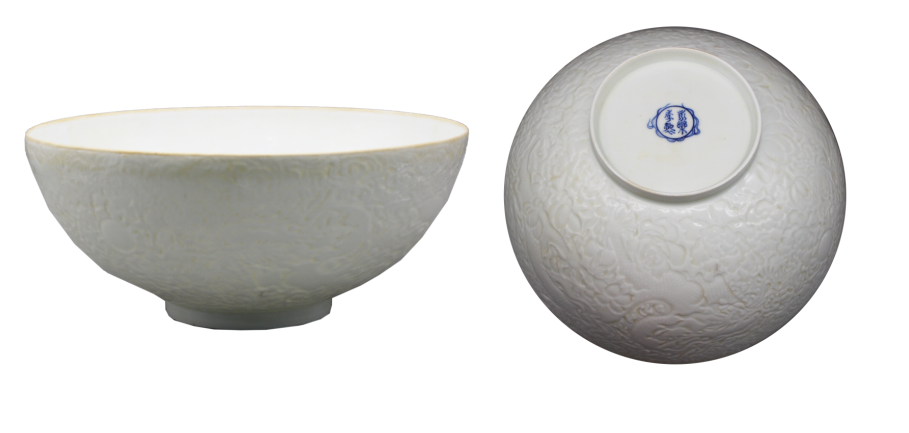
*本次藏品:永乐甜白釉龙凤大碗*
典藏尺寸:高:15cm 口径:34cm
在中国陶瓷发展的漫长星河中,明代永乐朝的甜白釉瓷器无疑是最璀璨的星辰之一,而甜白釉龙凤大碗更是这一品类中的扛鼎之作,承载着永乐盛世的政治理想、工艺智慧与审美追求。它以 “白如凝脂,素若积雪” 的釉色、“薄如纸,透如影” 的胎骨、“隐于釉下,动于光中” 的暗刻龙凤纹饰,成为中国古代白瓷工艺的巅峰象征,亦是明代宫廷用瓷制度与文化内涵的物质载体。永乐皇帝朱棣对白色器物的偏爱,为甜白釉的诞生奠定了政治基础。据《明太宗实录》记载,永乐四年(1406 年),回回使者进献玉碗,朱棣却婉拒道:“朕朝夕所用中国瓷器,洁素莹然,甚适于心,不必此也。” 这种对素白瓷器的推崇,既源于他早年在北平生活时受蒙古 “国俗尚白” 遗风的影响,也契合了明代宫廷祭祀制度的需求 ——《大明会典》明确规定,月坛祭祀需用白色瓷器,甜白釉恰好以其纯净莹润的质感,成为皇家祭器的首选。在这样的时代背景下,景德镇御窑厂集数代工匠之智慧,在元代枢府瓷的基础上,突破原料配比与烧制技术的瓶颈,创烧出甜白釉瓷器。而龙凤大碗作为宫廷用瓷的典型器型,将甜白釉的工艺优势与龙凤纹饰的皇家符号完美融合,不仅是实用的饮食器具,更是皇权威严与艺术美学的双重表达,历经六百年风雨,至今仍在博物馆的展柜中散发着温润而庄重的光芒。
In the long history of Chinese ceramic development, the sweet white-glazed porcelains of the Yongle period in the Ming Dynasty are undoubtedly among the most brilliant stars, and the sweet white-glazed dragon and phoenix bowls are the pinnacle of this category, embodying the political ideals, craftsmanship wisdom, and aesthetic pursuits of the prosperous Yongle era. With its glaze described as 'white as congealed fat, plain as accumulated snow,' its body 'thin as paper, translucent as a shadow,' and the incised dragon and phoenix patterns 'hidden beneath the glaze, animated in light,' it has become a symbol of the pinnacle of ancient Chinese white porcelain craftsmanship, as well as a material carrier of the Ming Dynasty imperial porcelain system and cultural connotations. Emperor Yongle, Zhu Di’s preference for white objects laid the political foundation for the birth of sweet white glaze. According to the "Veritable Records of Emperor Taizong of Ming," in the fourth year of Yongle (1406), a Muslim envoy presented a jade bowl, but Zhu Di politely declined, saying, 'The porcelain used daily in my court is pure, bright, and very pleasing to me; there is no need for this.' This admiration for plain white porcelain was not only influenced by his early years in Beiping, where he absorbed the Mongol 'national custom of valuing white,' but also aligned with the requirements of Ming court sacrificial rituals — the "Great Ming Code" specifically stipulated that white porcelain must be used in ceremonies at the Moon Altar. Sweet white glaze, with its pure and lustrous quality, thus became the royal choice for sacrificial vessels.Against such a historical backdrop, the Jingdezhen Imperial Kiln Factory, building on the wisdom of generations of craftsmen and the foundation of Yuan dynasty official porcelain, overcame limitations in raw material ratios and firing techniques, creating sweet white-glazed porcelain. The dragon and phoenix bowl, as a typical form of court porcelain, perfectly integrates the technical advantages of sweet white glaze with the royal symbolism of dragon and phoenix patterns. It is not merely a practical vessel for dining but also a dual expression of imperial authority and artistic aesthetics. After six centuries of history, it still radiates a warm and solemn brilliance in the display cases of museums.
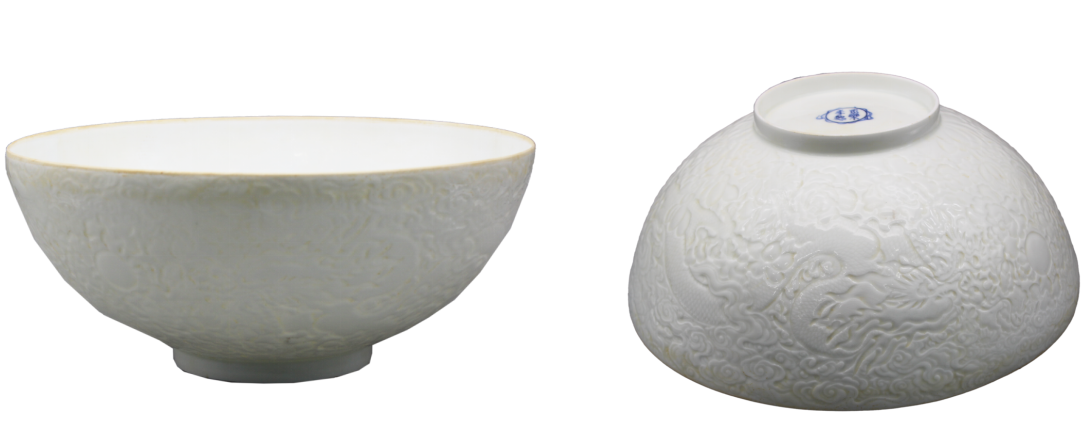
*本次藏品:永乐甜白釉龙凤大碗*
典藏尺寸:高:15cm 口径:34cm
雍甜白釉的诞生,是对元代枢府卵白釉的工艺革新。元代卵白釉因釉中含钙量较高,釉色偏暖且略显浑浊,而永乐甜白釉通过调整釉料配方,将氧化钙含量降至 4.3%,同时提高氧化钾含量至 3.1%,使釉层更显温润细腻,白度值达到 78.5%,接近现代高白瓷水平。这种化学成分的优化,使得甜白釉既保留了卵白釉的乳浊感,又避免了其粗厚泛青的缺陷,呈现出 “甜腻如脂” 的视觉与触觉感受,“甜白” 之名也由此而来 —— 后人形容其釉色如白糖般甜美,又如牛乳般温润,恰如其分地概括了其独特质感。
在烧制技术上,永乐御窑厂实现了精准控温与还原焰烧制的突破。甜白釉需在 1250℃至 1300℃的高温下,以还原焰氛围烧制,通过控制窑内氧气浓度,将釉料中的三价铁还原为二价铁,避免釉色泛黄。同时,工匠们首创 “素胎烧制” 工艺,先将素坯在低温下素烧,增强胎体强度后再施釉二次烧成,有效避免了薄胎器物在施釉与烧制过程中的变形与开裂,为半脱胎工艺的成熟提供了技术支撑。
甜白釉龙凤大碗的器型,源于明代宫廷 “宫碗” 的经典范式,其造型可追溯至宋代定窑白釉碗与元代枢府瓷碗,在永乐朝得到进一步规范与美化。碗型为撇口、弧腹、圈足,口沿锋利而圆润,腹部线条流畅饱满,圈足矮而规整,底心略凸呈 “塌底” 状,整体比例协调,既符合人体工程学原理,便于握持与使用,又彰显出皇家器物的端庄大气。
从功用来看,龙凤大碗兼具实用与礼仪双重属性。在宫廷日常生活中,它是帝后用餐的食器,其较大的口径(通常在 20 至 25 厘米之间)适合盛放羹汤、饭食;在祭祀与礼仪场合,它则成为月坛祭祀、佛事活动的重要供器,据《大明会典》记载,永乐朝曾多次命饶州府烧造白瓷碗、盘等器物,用于太庙与月坛祭祀,而龙凤纹饰的使用,更明确了其皇家专属的身份 —— 明代法律规定,五爪龙纹与龙凤纹为皇室专用纹饰,民间器物不得僭用,因此龙凤大碗本质上是皇权的物质象征。
The emergence of sweet white glaze represents a technological innovation over the egg-white glaze of the Yuan dynasty's imperial kilns. Due to its higher calcium content, the Yuan egg-white glaze had a warmer hue and a slightly cloudy appearance. During the Yongle period, the sweet white glaze was developed by adjusting the glaze formula, reducing the calcium oxide content to 4.3% while increasing potassium oxide to 3.1%. This made the glaze layer appear smoother and more refined, achieving a whiteness value of 78.5%, approaching the level of modern high-white porcelain. This optimization of chemical composition allowed the sweet white glaze to retain the milky translucence of the egg-white glaze while avoiding its thick and slightly greenish shortcomings, presenting a visually and tactilely "rich as cream" sensation. The name "sweet white" thus originated, as later generations described its glaze color as sweet like sugar and mellow like milk, aptly summarizing its unique texture.
In terms of firing technology, the Yongle imperial kilns achieved breakthroughs in precise temperature control and reduction firing. Sweet white glaze must be fired at high temperatures of 1250°C to 1300°C in a reducing flame atmosphere. By controlling the oxygen concentration in the kiln, the trivalent iron in the glaze is reduced to divalent iron, preventing the glaze from yellowing. Additionally, craftsmen pioneered the "bisque firing" technique, first firing the plain body at a low temperature to strengthen the body before applying the glaze and conducting the secondary firing. This effectively prevented deformation and cracking of thin-walled vessels during glazing and firing, providing technical support for the maturation of the semi-deboned process.
The shape of the sweet white-glazed dragon and phoenix large bowl originates from the classic model of Ming dynasty court "palace bowls," tracing its form back to Song dynasty Ding kilns' white-glazed bowls and Yuan dynasty imperial bowls, and further standardized and refined during the Yongle reign. The bowl features a flared mouth, curved body, and circular foot, with a sharp yet rounded rim, smooth and full body lines, a low and regular circular foot, and a slightly convex bottom forming a "recessed base." Its overall proportions are harmonious, conforming to ergonomic principles for easy handling and use, while also reflecting the solemn grandeur of royal vessels.
Functionally, the dragon and phoenix large bowl served both practical and ceremonial purposes. In daily court life, it functioned as dining ware for the emperor and empress, with a relatively large diameter (typically between 20 to 25 cm) suitable for serving soups or rice dishes. During sacrificial and ceremonial occasions, it served as an important offering vessel for rites at the Moon Altar and Buddhist ceremonies. According to the "Da Ming Huidian," during the Yongle reign, the government repeatedly commissioned the Raozhou Prefecture kiln to produce white porcelain bowls, plates, and other vessels for sacrifices at the Imperial Ancestral Temple and the Moon Altar. The use of dragon and phoenix motifs further emphasized its imperial exclusivity — Ming dynasty law stipulated that five-clawed dragon and dragon-phoenix patterns were reserved for the royal family, prohibiting their unauthorized use in civilian ware. Therefore, the dragon and phoenix large bowl essentially symbolized imperial authority.
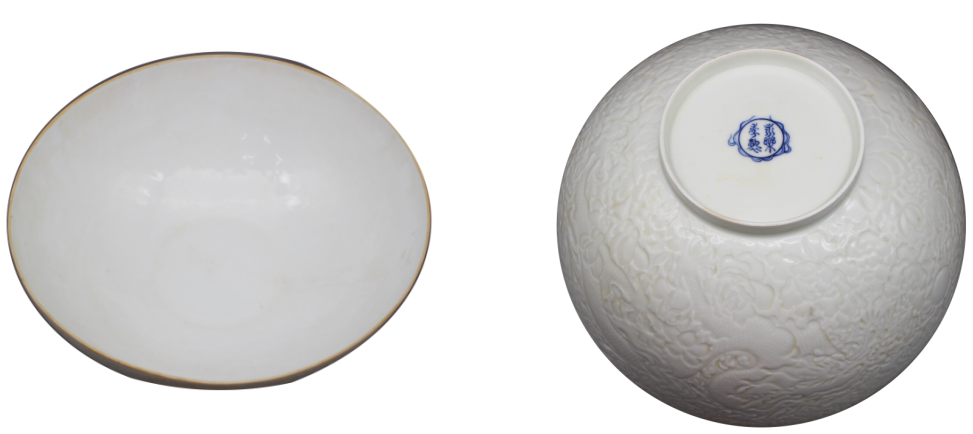
*本次藏品:永乐甜白釉龙凤大碗*
典藏尺寸:高:15cm 口径:34cm
永乐甜白釉龙凤大碗,是中国陶瓷史上的一座丰碑,它以极致的工艺、纯粹的美学与丰富的文化内涵,成为永乐盛世的物质象征,也代表了中国古代白瓷的最高成就。从胎体的半脱胎工艺,到釉面的甜腻质感,再到暗刻龙凤纹饰的隐秘美学,每一处细节都凝聚着明代工匠的智慧与心血,每一道纹路都诉说着永乐朝的辉煌与梦想。
它不仅是一件实用的宫廷食器,更是一件承载着皇权、信仰与礼仪的艺术作品,是连接过去与现在的文化纽带。在六百年后的今天,当我们凝视这只温润如玉的大碗,依然能感受到永乐盛世的气息,感受到中国传统文化的博大精深。它提醒着我们:真正的艺术,从来都不是繁复的装饰与艳丽的色彩,而是源于内心的纯粹与对极致的追求,正如甜白釉的素白之美,在平淡中蕴含着永恒的力量。
甜白釉龙凤大碗的魅力,不仅在于其工艺的精湛与价值的高昂,更在于它所代表的文化精神 —— 含蓄内敛、端庄大气、精益求精。这种精神,穿越千年时光,依然在今天的中国大地上熠熠生辉,激励着我们在传承中创新,在创新中发展,让中国陶瓷的千年瓷韵永续流传。
The Yongle Sweet White Glaze Dragon and Phoenix Bowl is a milestone in the history of Chinese ceramics. With its exquisite craftsmanship, pure aesthetics, and rich cultural connotations, it became a material symbol of the flourishing Yongle era and represents the pinnacle of ancient Chinese white porcelain. From the semi-hollow body technique of the clay, to the sweet and smooth texture of the glaze, to the hidden aesthetics of the incised dragon and phoenix patterns, every detail embodies the wisdom and dedication of Ming dynasty artisans. Every line tells the story of the glory and aspirations of the Yongle reign.
It is not only a practical court dining vessel but also an artwork carrying imperial authority, beliefs, and ritual significance, serving as a cultural link between the past and present. Six hundred years later, when we gaze upon this jade-like, gentle bowl, we can still feel the atmosphere of the Yongle prosperity and the profoundness of traditional Chinese culture. It reminds us that true art has never been about elaborate decorations or flamboyant colors, but originates from inner purity and the pursuit of perfection, just like the understated beauty of the sweet white glaze, which contains eternal strength within its simplicity.
The charm of the Sweet White Glaze Dragon and Phoenix Bowl lies not only in its superb craftsmanship and high value but also in the cultural spirit it embodies—subtle restraint, dignified grandeur, and meticulous pursuit of excellence. This spirit, traversing a thousand years of time, still shines brilliantly in today’s China, inspiring us to innovate while inheriting tradition, and to develop while innovating, ensuring that the millennium-long charm of Chinese ceramics will continue to be passed down.
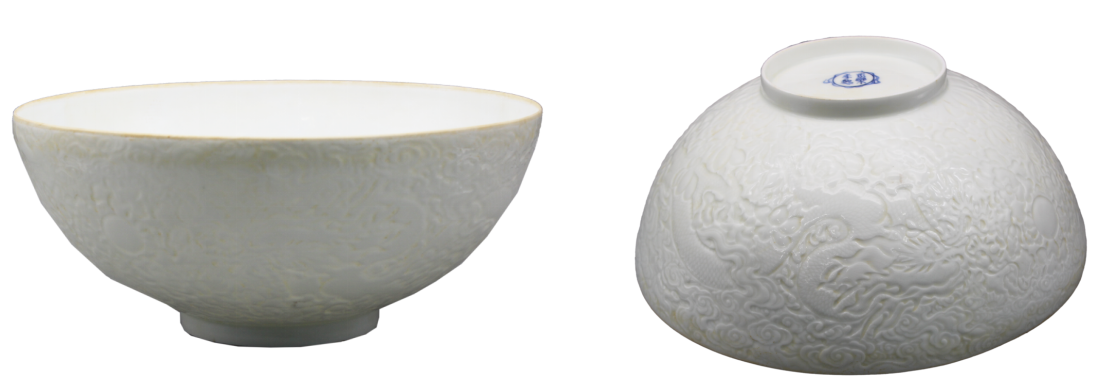
*本次藏品:永乐甜白釉龙凤大碗*
典藏尺寸:高:15cm 口径:34cm
以上藏品相关信息请与:四川尚亿拍卖有限公司联系。
For information about the above collections, please contact: Sichuan Shangyi Auction Co., Ltd